Everything You Need to Know About Wine & A Bag of Chips

You Shook Me All Night Long!

This is a guest post on Blogdramedy that recounts my personal dance with the Napa Valley fault line on Saturday night. I threw in some wine editorial – ahem – I mean education for this non-wino audience who will be wowing you with their intel at the next picnic, party, blind tasting or harvest festival any second now.

This quake was the scariest I’ve experienced and we are all grateful as the casualties could have been far worse. Although the town will need years of rebuilding and retrofitting, I wish Napatonians a speedy recovery both physically and mentally as we are now into harvest and ready to put another amazing vintage on the racks.

xoxo
Loie

7 Ways Grapevines Are Like People


First a disclaimer: I do not work for Ramsgate – I just love their wines and their winery is my dream home – the great hall, the view, long driveway, fire place-es, garden, beehives et all! Designed by award winning architect Howard Backen, it is a modern interpretation of the weathered farmsteads of old Carneros. Very chic – I especially love the wine library. Swoon.

I also enjoy their quick and easy posts on wine education – nothing fancy – nothing to heavy to contemplate, meditate, consternate because they nicely abbreviate. Please enjoy this post on the 7 ways vines are like people. Take special note of point #6. It leaves room for reader interpretation.

“6. They [people+vines] need to be pruned each year in order to grow the next.”

How do people get pruned? Is that like getting your hair and nails done? Man-scaping for the gents? Or is it what happens when sitting in the tub too long? Well, I will not ruminate too much or I might be considered a prune. Maybe this was one of those inside jokes…and my mind wanders….

I was most inspired by point #7:
“7. The more struggles they [people+vines] are forced to overcome, the healthier they – and their fruits – become.”

I agree wholeheartedly with this point. I reflect fondly on past challenges in life that seemed insurmountable and by overcoming them, like a vine, I experienced growth and built character. Coincidentally, my young “fruits” are wine-ing in the face of adversity right now. This mother of a “vine” will not be indulging them with Dum-Dum lollipops and iPad video games for breakfast. They shall become healthier fruit because of it…now go eat your oatmeal and read a book.

The link to their post:

7 Ways Grapevines are like People.

Stay curious!

Loie


Walla Walla: Pioneers, Next Gen, Foreign Legion & Millennials

Walla Walla’s Success as Applied to the Cluster Theory of “Competitive Advantage”

I love to geek out on business data and the wine industry has more than enough reasons to get your geek on. Professor Emeritus Mike Veseth is one of the leading wine industry economist and always presents his work in a reasonably easy way to understand and apply.

In this post he explains some economic theory as applied to the Washington wine industry, specifically Walla Walla. Ok people, especially Francophiles and Californians (notice how I didn’t mention the wine regions less prone to superiority complexes?) We may be fabulous, but we can all learn something from mes amis in the North West. They are taking no prisoners and when cult wine makers like Todd Alexander are lured from Napa to go work in WA – it’s time to take notice. More on that story at this link: http://bit.ly/1oGELAt

My key takeaway: Walla Walla’s success as one of the top performing wine regions in the US has been accelerated through the dynamic and synergistic interaction of wine industry people. The research categorizes them into four loose groups: the Pioneers, the Next Generation, the Foreign Legion and the Millennials. It’s a good read and not much longer than my preamble.

I will admit, I’m not well versed in WA wines, but I will now start taking notice.

Stay curious!
Loie

Mike Veseth's avatarThe Wine Economist

Harvard business professor Michael Porter famously conceived of a “cluster” theory of “competitive advantage.” It isn’t one thing that makes a regional industry successful, he said, but rather it involves the dynamic interaction of a network of forces and factors that, when they come together, create an environment where all are successful.

Porter’s “diamond” analysis can be applied to many regions and industries, even wine. In fact. Nick Velluzzi of the Walla Walla Community College has applied it to his region’s wine sector (click here to read about his research). If you are interested in wine clusters or Walla Walla you should check out his work.

I am interested in how and why Walla Walla has risen to the top tier of American wine region, but  this week I want to talk in terms of human networks not Porter’s approach, which focuses on networks of market institutions. It seems…

View original post 837 more words

Veraison in the Vines

A Little Wine Education Don’t Hurt Nobody…

I have grapes in my garden and I have NO idea what those little adorable pearls of deliciousness are doing – for all I know, they could be staging a coup. I’m sure they are going to go on “manifestation” and make demands for more water. I will not negotiate. It is a CA drought you selfish little bastards – let them eat cake and storm the Bastille, I shall remain resolute. I actually think they are going through puberty which in the vintners world is referred to as ‘veraison’ – ha! Throw that one down when you want to discuss the grapes turning color in the vineyard, you will undoubtedly appear to know what it takes to cultivate and nurture the harvest and if you read this article from one of my fave wineries, Ramsgate, you may actually learn something you can genuinely discuss….actually knowing a little something always trumps being a faux snob.

Stay curious!
loie

ramsgatewinery's avatarRam's Gate Winery Ramblings

Veraison is a French term used to describe the onset of ripening, as grapes soften and change color from green to purple (for red grapes) or a lighter green/yellow (for white grapes). Three weeks ago, the first signs of veraison appeared in our Estate Wingo Vineyard.

Grapes-veraison

Not to be outdone by the vineyard, the tomatoes in our Four Farmers’ Culinary Garden followed suit: 

 Tomatoes going through veraison

The grapevines and tomato plants share the same goal: producing more of their kind. In order to do so, both plants want their seeds to be carried away — something best achieved with sweet, tantalizing berries.

Veraison is important because it’s the commencement of that flavor development. As the leaves absorb sunlight, they transform the rays into sugar and send that nourishment to the grapes. In the berry skins, green chlorophyll is replaced by phenolic compounds, adding pigment to the skins and causing color change. 

From the vineyard calendar perspective, this means that…

View original post 9 more words

The Very Snobby Caterpillar

It was an honor and a privilege to guest post on Blogdramedy – enjoy!

Did someone mention value?

Screen Shot 2014-06-30 at 12.28.12 AM

“The world is full of value wines and valuable wines, but the two couldn’t be more disparate.  Unfortunately, value wines get served at events, especially weddings, when you should be serving valuable wines.  So what separates the two?” — the Sybarite

The preceding quote from last month’s Wine Writing Challenge winner, The Sybarite, inspired me to hop on the keyboard and present my hypothesis on the wine value proposition. My quest for the finest of cheap wines has been particularly menacing due to my current domicile in a highly regarded Californina AVA. Bringing a cheap bottle of wine to a soirée can elevate tensions akin to the unrest of an Arab Spring. Flashing a cheap bottle at a more menacing event, like a farmer’s market, can be highly precarious as the picnic snob set are infamous for carrying a concealed corkscrew of restaurateur quality. 
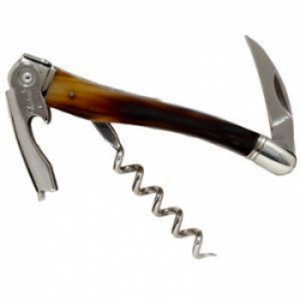
Corkscrew

Although I have been ostracized, unfollowed and unfriended, I wear the stigma with pride. Regardless of whose nose I offend or palate I maim, I am resolute in my journey of finding the rarest, most valuable and coveted of all the Earth’s vintages: an excellent wine for under $10.

A bit of courage, some know-how and plenty of luck…

Admittedly, my chosen profession as a reviewer of cheap wine is a blight to my family. As aforementioned, we live amongst a populace of highly educated winos and plentiful sources of excellent wines. My mission is seen as fanatic and eccentric. My family demands to remain anonymous. There are no friendships made in the cheap wine tasting cellar. The tone is austere and so deprived of conviviality it has been referred to as a catacomb. The brave few will join me in a toast, but most, run screaming to their computers to take me off their E-vite guest list.

 DaliWine

When I do find that beautiful bottle of wine that receives countless compliments and cost less than a Frappuccino, I am suddenly genius, popular and reintroduced to polite society. Why? Because there is a direct correlation to peer perceptions of intelligence and expertise when one finds something valuable for little to no cost. This phenomenon is akin to finding gold galleons in a shipwreck or a Dali in grandma’s attic. When you can share a wine discovery that is remarkably affordable, of exceptional quality, and is wholeheartedly enjoyable, you have proven your value to society. 

Serendipity strikes…

As I was pondering how to substantiate my wine value proposition, serendipitously today, Gary Vaynerchuk tweeted a link to a short video about how to bring people value. His value framework defines utility, escapism and entertainment as the key principles. So I applied them. Cheap wine offers utility through accessible everyday price points. Check. Escapism through imbibing. Check. Entertainment through the hunt. Check.

These three themes are exalted in every social media channel known via posts about drinking wine, why we drink wine and the after effects of drinking wine. With confidence I presume the hoi polloi is not hitting “like,” “share,” and “RT” because these memes illustrate the humor in first growth wines from Bordeaux. I rest my case, but wait; indulge me for one moment further.
Boxwine

Sir Jeff Siegel, knighted for his significant contributions to the commonwealth of winos and author of The Wine Curmudgeon’s Guide to Cheap Wines (must see Ten Dollar Haul of Fame at winecrumudgeon.com) states that “…anybody can go spend a lot of money and find a great bottle of wine, but how come nobody had ever thought of finding a great bottle of wine for not a lot of money? You find that in every other consumer good…the wine business had never really done that.” Exactamente!

{ the below image has had thousands of views, likes and RT. Ok?}
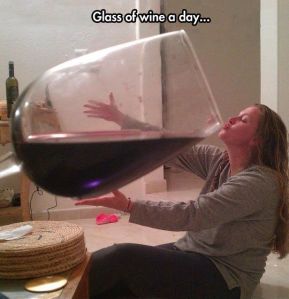
 giantglass_670pins

Millennials and the democratization of wine after the great recession…

And thus blossomed the likes of Sir Jeff and The Reverse Wine Snob who pioneered the genre through their pragmatism and humor which started the movement for the democratization of wine for the masses and not just the classes. They set the stage for the next generation of wine aficionados who came into legal drinking age post apocalyptic economic downturn, aka the Great Recession. These winos have different expectations. They are not collectors, they are collaborators. They want to get nerdy about wine and share their knowledge. They drink what they like and what is aplenty. They can accept that wines under $10 can be exceptional. How can I stand behind this declaration? Mathematics and the new economy, perhaps?

Linda Murphy, of winereviewonline.com, puts it best in her post titled Cheap Thrills “…the fact that many rewarding and interesting wines can still be found for less than $15, and more importantly, for less than $10, which is approximately the price of a six-pack of craft beer.” Quite pithy.

 Love, hate and loathing at the bottom two shelves…
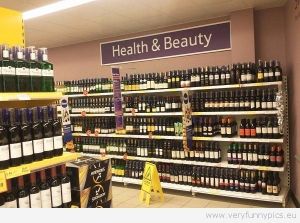
heathand beautywine

The wilderness starts at the bottom shelf of the wine department in any supermarket. Never mind the dust bunnies, we are seeking a wine so delectable, unexpected and rare, we will be kissing a few Jackalopes and Chupacabras before we ride the Unicorn. Akin to mining diamonds or spotting the rarest of birds in their habitat, exceptional value wines can appear unexpectedly. As I machete through the jungle of cutesy labels, clever names and “on sale” signs, this experience can be discouraging and often one limited on time, especially if your ride is in the parking lot honking while the engine is running. 

I rarely have the pleasure of finding wines at the $10 and under price point enjoyable. I believe the bar is so low on inexpensive wines that there is a bias. If you paid very little for a wine and it is palatable, it’s “good.” Not a chance here. I rarely post great reviews and I am often disappointed. However, what keeps me motivated is the thought of a misguided wine buyer with enough means but not enough confidence being seduced by a price and a pretty label. When disappointed by their selection and the missed opportunity to drink good wine, I feel the angst, hence those bottom 2 shelves are my hunting grounds.

Value proposition demystified…

“It’s not enough that a wine is cheap (or expensive, for that matter). Does it offer more value than it costs?” — the winecurmudgeon.com
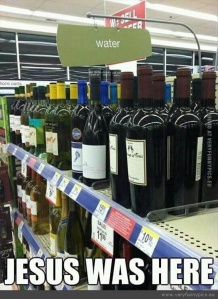
funny-picture-water-into-wine-jesus-was-here

It’s easy to spend countless amounts of money on good wine. A $100 wine is not necessarily 10 times better than a $10 wine. Albeit, if you drank 10 wines under $10 and one of those wines was phenomenal, what would that be worth to you? Is the thrill of the hunt as valuable as the find? Whatever the effort it takes to seek an excellent wine at an unbeatable price, when you make that discovery and share it with the world, the value is now exponential. 

I remain curious.
loie


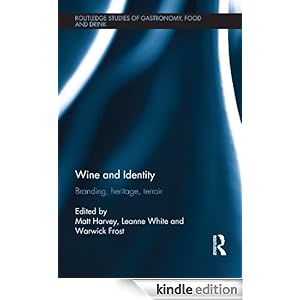
Wine and Identity: Branding, Heritage and Terroir — a review

This is what I’ll be reading -my worlds are colliding!
Stay curious!
Xo
Loie

Mike Veseth's avatarThe Wine Economist

Matt Harvey, Leanne White and Warwick Frost (editors), Wine and Identity: Branding, heritage, terroir. Routledge, 2014.

The premise of this interesting collection of academic papers is that the global wine market is highly competitive and rapidly changing and, in this dynamic environment, identity has become an increasingly important factor in the way that wine is thought about, experienced and especially how it is marketed.

Harvey, White and Frost, Australian professors of law, marketing and tourism respectively, analyze wine and identity in terms of heritage, branding and terroir — three flexible but useful “created” concepts.

You might think that heritage and terroir are historical and natural phenomena whereas brands are manufactured by marketers, but when you think about it heritage and terroir are subject to the same story-telling factors as commercial brands and are perhaps more powerful because unlike a created brand they bring with them a sense of authenticity.

Like many…

View original post 278 more words

Sadly, this Cab was not fab.

HaciendaCabSauv

Hacienda 2012 Cabernet Sauvingon, CA $5.99

As I lose friends, my self respect and a few tastebuds, I do it for you my dear readers, all blessed 3 of you. (by the way, glad you liked the wine cork planter magnate idea for father’s day.) Therefore I am still driven to seek that hidden treasure and share it with the world. Enough of my blather. This wine was disappointing – blech.

The nose on this 2012 Cabernet Sauvignon was rhubarb, a little plum, hot. First sip I tasted cherry and it finished with berry and oak. It was NOT smooth, very harsh and maybe if it had the chance to decant and open up, the noxious fumes would be released to enjoy what very little there is in this wine to enjoy. Alas, not the case. The alcohol content definitely got to my head right away. This wine would be best served with an ibuprofen aspic – anyone have a good recipe?

At best, throw this in with the roast or cook up a frat party sangria. This wine is rated as blech. Marchons!


Stay curious,

loie


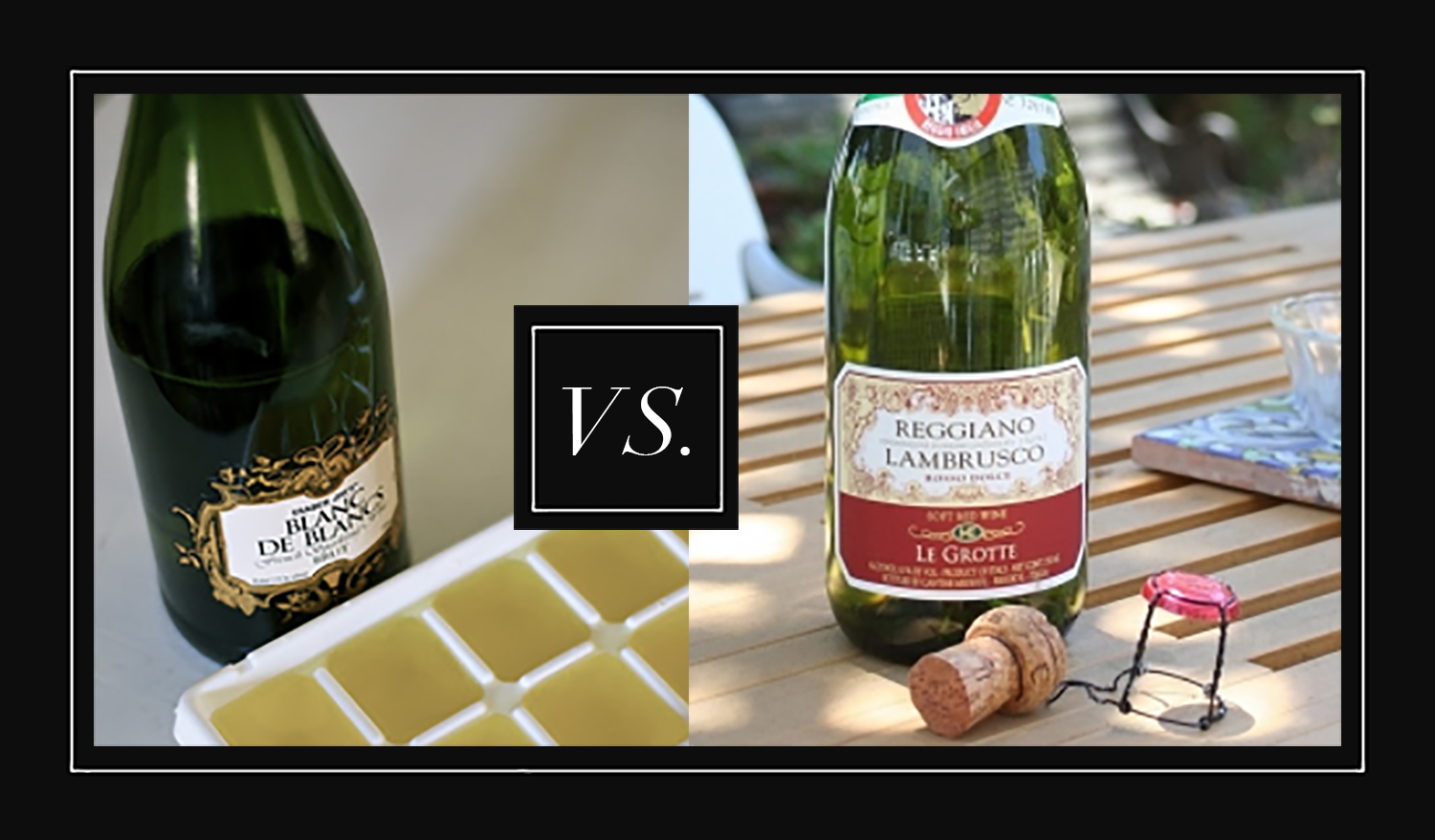
Battle of the Sparklings! Blanc de Blancs $4.49 vs. Lambrusco $4.99 and the winner is…..

SparkBattle

Both wines are available at Trader Joe’s 


Sparkling Manischewitz? Fizzy Communion Wine? Delish! Le Grotte Reggiano Lambrusco Dolce, $4.99
You will adore this Itallian sparkling red. Bouquet is heavy grape with touch or rose – someone mentioned a mash-up of red and purple Skittles. First sip is yummy, bold, surprisingly refreshing. The people around the table were expressing that this is the perfect appertivo with an antipasti or before a steak and of course pasta. This wine is more of a frizzante (less bubbles than what you would expect from a sparkling wine or traditional champagne) it could also be a lovely dessert wine, but do not get the impression that it is cloyingly sweet because it is delightfully light. Guestworthy – buy again!

Caution: may cause headache. Trader Joe’s Blanc de Blancs Brut FR $4.49
Bouquet acidic floral – one guest said like a stargazer lilly – then the first sip is crisp like a pear and finishes with a sweet mustard, it’s not that harsh but it may not be for you. The description on the label says “…delicate, fruity character and refined, lasting flavor.” That lasting flavor may taste like _________ you fill in the blank (one taster mentioned urine another mustard gas. I am not one to ask how either of them know these flavors, I merely conduct the research.) Overall, in a pinch for a less than special occasion, it’ll do for those who could care less about sparkling, but I would say it’s barely drinkable. 

LAMBRUSCO beats TJ Blanc de Blanc Brut with out a doubt. 
Stay curious,
loie